Best AI for Chemistry (and Organic Chemistry): Pick by Topic and Level
Pick the best AI for chemistry by topic and level: a step-by-step tutor for equations and calculations, mechanism practice for organic chemistry, and a short checklist to test any AI answer before you trust it.

How to pick the best AI for chemistry
The best AI for chemistry is the one that matches your topic: a step-by-step tutor for equations and calculations, a mechanism trainer or an organic-focused tutor for organic chemistry, and explanation plus practice for exam weeks. Whichever you pick, it should show the method and let you try the next problem yourself.
Use three checks before you commit. Does it explain the steps and then hand the next step back to you? Does it cover your topic and level, from high school general chemistry to college organic? And what does the free plan allow compared with the paid one, according to the vendor's own page?
This is not a ranked "tested" list. It is a route by topic, with free and paid notes taken from each vendor's own pages (checked 30 Oct 2026). Julius AI is left out: its site presents it as a tool for data analysis, spreadsheets, websites and slides, not as a chemistry tutor.
Pick by topic and level
Start from the kind of problem on your worksheet, not from the tool. Calculation work, organic mechanisms and exam practice each need a different kind of help.
Equations, stoichiometry and calculation work
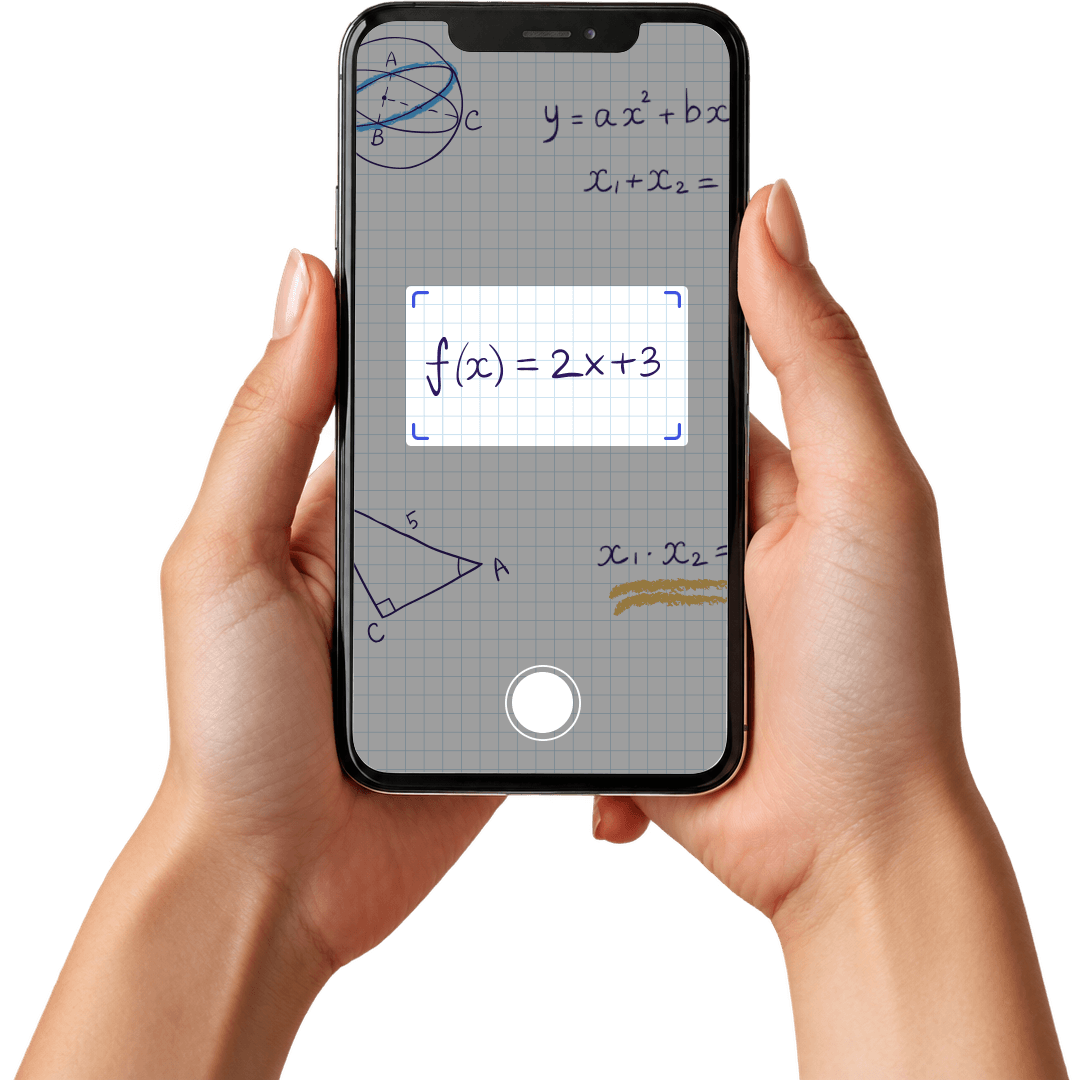
For balancing equations, limiting reagents, gas laws or titration math, you want a tool that shows the atom or mole ratio line before the final number, keeps units visible, and asks you to attempt the next step. A photo upload helps when the worksheet is already on paper. Astra AI fits this lane: it walks you through chemistry problems step by step, reads a photo of a worksheet or a single problem, and tries a different explanation when you ask a follow-up (Astra AI Chemistry, checked 30 Oct 2026). Pearson's General Chemistry AI Tutor also offers step-by-step guidance and video lessons (Pearson General Chemistry AI Tutor, checked 30 Oct 2026).
Exam practice for AP, IB and A-level (kept generic)
For exam weeks you need repeated practice on weak topics, not a single solved homework line. Prefer tools that pair an explanation with a similar question, or that mark your answers and show where a step went wrong. Astra AI gives you practice questions on what you are learning, marks every answer and shows exactly where a step went wrong (Astra AI Chemistry). Pearson's AI Tutor pairs video solutions with similar examples (Pearson AI Tutor). Do not expect any of these tools to mirror a specific board syllabus line by line; treat AP, IB and A-level mentions as exam-style practice only.
Best AI for organic chemistry
For organic chemistry, the best AI is one that makes you push the arrows yourself and explains the conditions behind each step, not one that only names the reaction type. A mechanism trainer such as Alchemie Mechanisms covers arrow-pushing practice, and an organic-focused tutor such as Pearson's Organic Chemistry AI Tutor covers explanations.
Alchemie's Mechanisms app is built around guided, puzzle-based mechanism practice with real-time feedback, across both semesters of organic chemistry (Alchemie products, checked 30 Oct 2026). Pearson's Organic Chemistry AI Tutor gives step-by-step guidance, and its page says it shows curved arrows, intermediates, and regiochemistry and stereochemistry considerations (Pearson Organic Chemistry AI Tutor, checked 30 Oct 2026). A general chat model can sketch a mechanism; for arrow-pushing practice, use drills where you move the electrons yourself.
What to check in an organic chemistry answer
| Skill | What a good AI answer shows | Quick test you can run |
|---|---|---|
| Mechanisms and arrow pushing | Every arrow starts at a lone pair or a bond and ends at an atom that can accept electrons; intermediates and formal charges are drawn | Cover the answer, draw the arrows yourself, then compare |
| Reaction prediction | The conditions that decide the outcome: reagent, solvent, temperature, substrate | Change one condition and ask whether the product changes |
| Nomenclature | The longest chain or parent ring, numbering direction and substituent order explained | Name the product yourself, then ask the tool to name it |
| Spectroscopy | Each signal tied to a specific part of the structure (IR band, NMR shift, splitting) | Ask which peak rules out the other candidate structure |
Worked example: one SN2 mechanism
Worked example written by the Astra AI team to show what a complete answer looks like.
Problem: Bromomethane reacts with hydroxide. Show the mechanism and the products.
- Find the nucleophile and the electrophile. Hydroxide (OH⁻) carries a negative charge and lone pairs on oxygen, so it is electron rich. The carbon in CH₃Br is partially positive because bromine pulls electron density toward itself, so that carbon is electron poor.
- First arrow. Draw an arrow from a lone pair on the oxygen of OH⁻ to the carbon, approaching from the side opposite the bromine.
- Second arrow. Draw an arrow from the C to Br bond onto the bromine. Bromine leaves as bromide, Br⁻.
- Why SN2 and not something else. A methyl carbon has no neighboring carbon, so there is no beta hydrogen to remove (no elimination) and a methyl carbocation is too unstable to form (no SN1). Bond forming and bond breaking happen in one step.
- Check the result. CH₃Br + OH⁻ → CH₃OH + Br⁻. Atoms balance on both sides, and the total charge is −1 on each side.
If an AI answer for this problem skips the reason in step 4 or draws an arrow starting from the bromine, treat it as incomplete.
How to check an AI chemistry answer
Check an AI chemistry answer the way a teacher marks one: confirm the balance, the units and the logic before you accept the final number. AI can make mistakes, so ask the tool to explain how it reached the answer and run these checks yourself (Astra AI for parents, checked 30 Oct 2026).
- Atoms and charge balance. Count every element on both sides, then add up the charges. Both must match.
- Units. Every quantity carries a unit through the calculation, and the final unit is the one the question asks for. Watch for volume units, such as mL left unconverted to L.
- Significant figures. The answer should not be more precise than the least precise measurement in the question.
- Mechanism arrows. Arrows go from electron rich (a lone pair or a bond) to electron poor (an atom that can accept the pair), never backward.
- Conditions. For substitution versus elimination, the answer names the solvent, the leaving group, the temperature and the substrate. A label alone is not a mechanism.
What a good tutor answer must show
A good tutor answer shows the method behind the number, so you could solve the next problem without help. Use these examples to test any tool's output.
Balancing (propane combustion). A solver can print . A useful tutor answer also shows why oxygen is left until the end, why coefficients stay whole numbers, and a quick atom count on both sides (C, H, then O).
Limiting reagent (Al + O₂). Do not accept only the final mass. The answer should write the mole ratio from the balanced equation, convert each reactant to moles, identify which reactant runs out first, and only then convert to product. If the mole ratio line is missing, ask for it.
Titration and concentration. The number alone is not enough. Look for units and significant figures, the meaning of the endpoint, and what the color change is telling you.
Tool cards (sourced free vs paid)
Each card below lists what the tool does for chemistry and its free and paid terms as shown on the vendor's own page on 30 Oct 2026. Prices change, so check the page again before you pay.
Astra AI
What it does for chemistry: Step-by-step tutoring for reactions, molecular structures and balancing equations; a photo of a worksheet or a single problem; marked practice questions; follow-up questions when a step is unclear (Astra AI Chemistry, checked 30 Oct 2026).
Topics and level: School chemistry and general chemistry calculations. Useful when you need explanations and another attempt, not only the final answer.
Free vs paid: You can start free, no card required. Astra AI Plus unlocks unlimited tutoring, mock exams and podcasts for less per month than a single hour of private tutoring (Astra AI home FAQ, checked 30 Oct 2026).
Honest limit: If you only ask for final answers, it becomes a solver. Use the hints and try the next problem yourself, or the method will not stay with you for the exam.
Pearson AI Tutor and Study Prep
What it does for chemistry: Pearson's Channels AI Tutor offers step-by-step help, video lessons, and similar examples with video solutions, with separate pages for general chemistry and organic chemistry (Pearson AI Tutor, General Chemistry AI Tutor, checked 30 Oct 2026).
Topics and level: Structured college chemistry homework and concept review with video support.
Free vs paid: Study Prep plans on Pearson's site are $14.99 per month, $29.97 every three months, or $95.88 every twelve months (Pearson Study Prep, Channels rate plan, checked 30 Oct 2026). Study Prep is also included in select MyLab and Mastering courses, so access may come through your course.
Honest limit: Course access works well when your class already uses Pearson. Outside that, you are paying for a full Study Prep library rather than a single chemistry tutor.
Alchemie Mechanisms
What it does for chemistry: Puzzle-based organic mechanism practice. You move electrons with real-time feedback, and every puzzle has an instructional video (Alchemie products, checked 30 Oct 2026).
Topics and level: Organic chemistry arrow pushing across both semesters. It is not a general stoichiometry homework helper.
Free vs paid: 50 puzzles free; full access is a one-time purchase of $9.99 on Alchemie's products page.
Honest limit: Mechanisms trains mechanism skill only. For titration math or a plan across several chapters, pair it with a step-by-step tutor.
Where Astra AI fits
Astra AI is the option on this list when you want step-by-step chemistry help with hints, a photo of the problem, and marked practice on what you are learning (Astra AI Chemistry). It helps most students, not all: start free to see whether the explanations match how you learn, and move to Astra AI Plus if the free message limit interrupts longer sessions (Astra AI for teachers, checked 30 Oct 2026).
The tradeoff is the same as with any capable tutor: if you skip the reasoning and only collect final answers, the method will not stick. Use it to attempt the next problem, not to avoid thinking. If you also study other sciences, the same approach works in the best AI for biology and the best AI for physics, and the best AI tutor guide compares tutors across subjects.
Meet your tutor, free.
Snap a problem or ask your first question and see how fast it clicks. No card, no setup.
Quick recap
Match the tool to the topic, then check every answer before you trust it.
- Calculation tutor for stoichiometry and titrations; mechanism practice or an organic-focused tutor for organic chemistry; explanation plus marked practice for exam weeks.
- Check atoms and charge, units, significant figures, arrow direction and reaction conditions before you accept an answer.
- Read free and paid terms on the vendor's page for the date you care about, because limits and prices change.
Pick one problem from your own worksheet tonight, run it through the tool that matches your topic, and keep only the answer that passes the checks above.
Frequently asked questions
What is the best AI for chemistry?
The best AI for chemistry is the one that matches your topic and level. Use a step-by-step tutor for equations and calculations, mechanism practice for organic chemistry, and explanation plus marked practice for exam weeks. Pick a tool that shows the method and lets you try the next problem yourself.
What is the best AI for organic chemistry?
For organic chemistry, pick a tool that makes you push the arrows yourself and explains the conditions behind each step. Alchemie Mechanisms is built for puzzle-based arrow-pushing practice, and Pearson's Organic Chemistry AI Tutor gives step-by-step explanations with curved arrows and intermediates.
Can AI help with organic reaction mechanisms?
Yes, if it shows every arrow, the intermediates and the conditions that decide the outcome. A useful answer explains why a reaction goes SN2 rather than SN1 or elimination. Cover the answer, draw the arrows yourself, then compare.
Can AI chemistry answers be wrong?
Yes. AI can make mistakes, so do not treat every response as correct. Check atom and charge balance, units, significant figures and arrow direction, and ask the tool to explain how it reached the answer.
- Astra AI Chemistry (checked 30 Oct 2026)
- Astra AI home, pricing FAQ (checked 30 Oct 2026)
- Astra AI for teachers, free version message limit (checked 30 Oct 2026)
- Astra AI for parents, AI can make mistakes (checked 30 Oct 2026)
- Pearson Channels AI Tutor (checked 30 Oct 2026)
- Pearson General Chemistry AI Tutor (checked 30 Oct 2026)
- Pearson Organic Chemistry AI Tutor (checked 30 Oct 2026)
- Pearson Study Prep plans (checked 30 Oct 2026)
- Pearson Channels rate plan (checked 30 Oct 2026)
- Alchemie products, Mechanisms free and paid (checked 30 Oct 2026)
- Julius AI home, not a chemistry tutor (checked 30 Oct 2026)
Stuck on a problem? Just scan it.
Snap a photo of any question and the AI Tutor walks you through it step by step, until it actually clicks.
Try for free